
In today’s digital world, a website is often the first impression customers have of a business. A modern and professionally designed website not only attracts visitors but also helps build trust, improve user experience, and increase conversions. As technology continues to evolve, businesses must stay updated with the latest website design trends to remain competitive online.
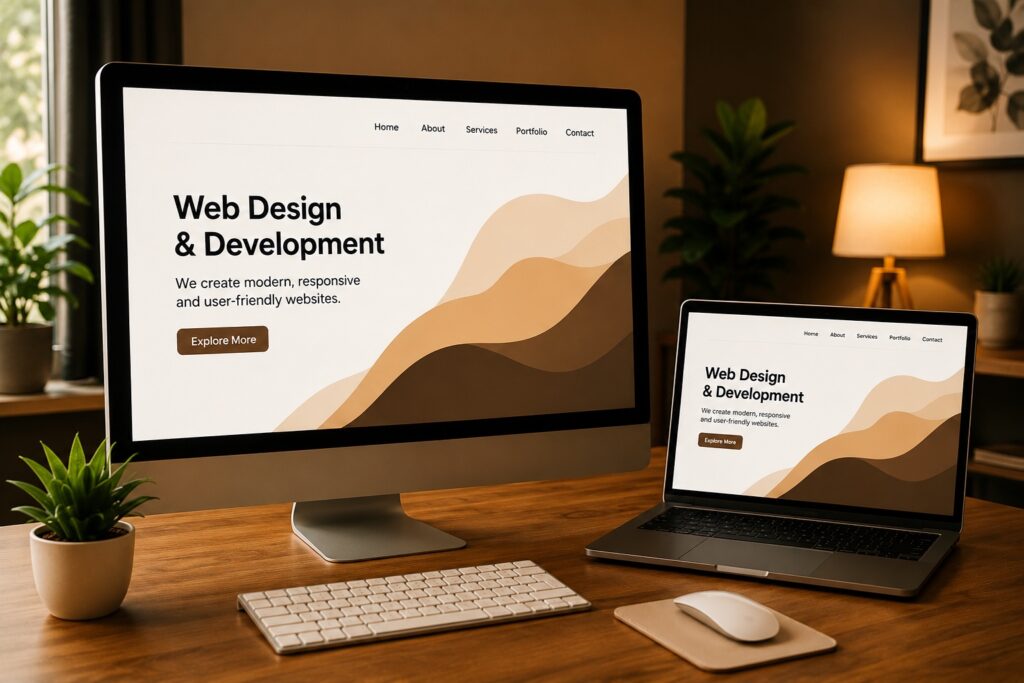
One of the most important trends in modern web design is responsive design. With people accessing websites from smartphones, tablets, laptops, and desktops, a website must adapt seamlessly to different screen sizes. A responsive website ensures a consistent and user-friendly experience across all devices.
Website speed has also become a major factor in user experience and search engine rankings. Visitors expect websites to load quickly, and even a few seconds of delay can result in higher bounce rates. Optimizing images, reducing unnecessary code, and using modern development practices can significantly improve website performance.
Minimalist design continues to be a popular trend among businesses and brands. Clean layouts, simple navigation, and effective use of white space help users focus on important content without distractions. A minimalist approach also creates a professional and modern appearance.
Another growing trend is the use of engaging visuals and interactive elements. High-quality images, animations, hover effects, and videos can make websites more attractive and encourage users to spend more time exploring content. However, these elements should be used strategically to avoid affecting website speed and usability.
User experience (UX) remains at the center of successful web design. Easy navigation, clear call-to-action buttons, readable typography, and well-structured content help visitors find information quickly and efficiently. A positive user experience can lead to higher engagement and improved conversion rates.
Accessibility is becoming increasingly important in modern website development. Websites should be designed to accommodate users with different abilities by providing proper contrast, readable fonts, alternative text for images, and keyboard-friendly navigation. An accessible website creates a better experience for all users.
Security is another essential aspect of modern web design. Secure websites using HTTPS encryption help protect user data and build trust among visitors. Search engines also prioritize secure websites, making security an important factor for SEO performance.
Modern website design is not just about aesthetics; it is about creating a functional, user-friendly, and high-performing digital experience. Businesses that invest in modern web design can improve their online presence, attract more visitors, and achieve long-term growth in an increasingly competitive digital landscape